
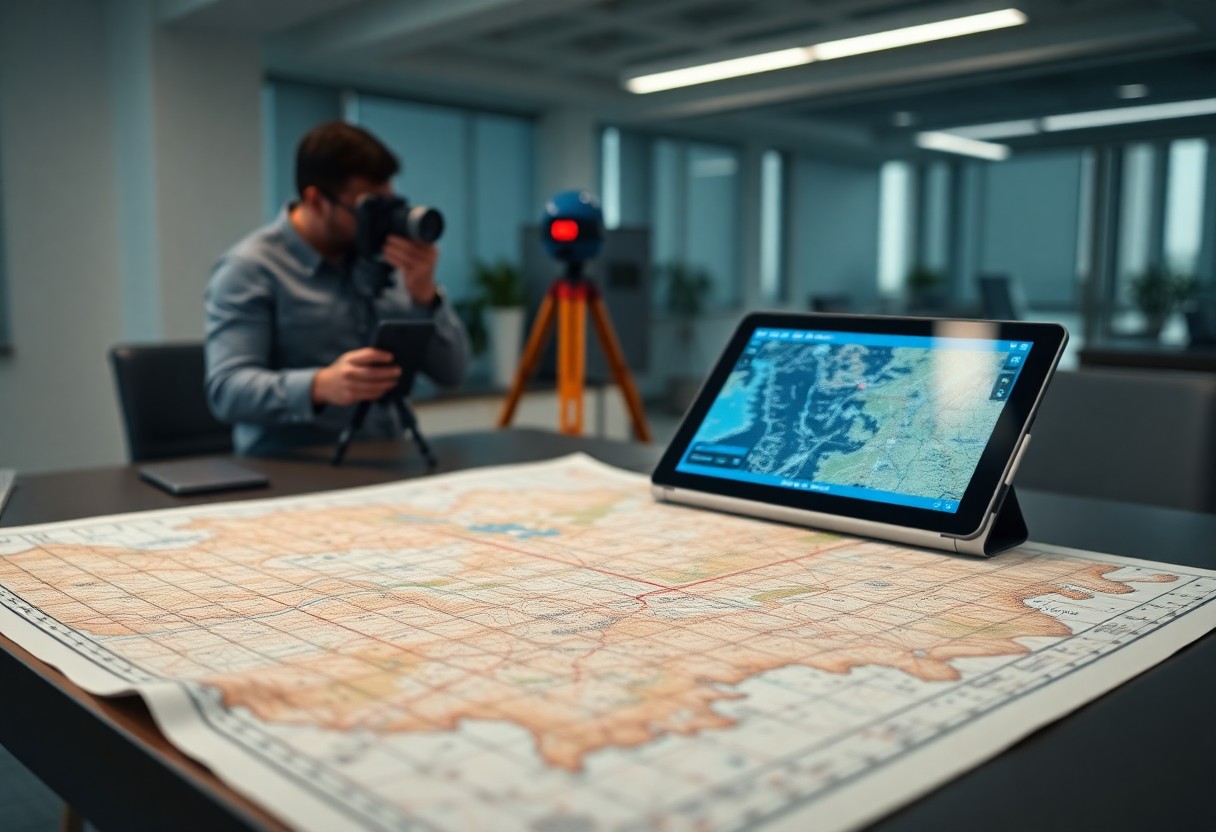
Many professionals face the challenge of converting hard copy maps into digital formats efficiently. By utilizing quarter-quarter sections, you can enhance the precision and organization of your digitization process. This method divides larger land parcels into smaller, manageable pieces, making it easier for you to process and integrate map data. Understanding the benefits of this approach can significantly improve your workflow, reduce errors, and facilitate better data management in your digital mapping projects.
The Power of Quarter-Quarter Sections in Mapping
Defining Quarter-Quarter Sections and Their Geographic Significance
Quarter-quarter sections break down standard sections, typically one square mile, into four smaller units, each measuring 160 acres. This granularity allows for precise land management and development planning, enhancing your ability to analyze spatial relationships and resource distribution. With quarter-quarter sections, you can easily identify and evaluate land parcels, improving zoning and regulatory compliance in your projects.
Historical Context: Transitioning from Paper to Digital Formats
The shift from paper maps to digital formats began in the late 20th century, fueled by technological advancements in GIS and computing. Early efforts to digitize land records were slow and error-prone, often requiring manual data entry. As software evolved, integrating geographic data became faster and more efficient, allowing for accurate representations of quarter-quarter sections. This transition not only improved accessibility but also facilitated real-time updates and analysis, optimizing your workflow in map digitization.
The digitization process accelerated with the development of user-friendly GIS applications, enabling you to view, edit, and analyze map data seamlessly. Increased government investment in digital infrastructure led to widespread availability of spatial datasets, allowing diverse sectors, including agriculture and urban planning, to harness the power of digital mapping. Enhanced tools also simplified complex tasks, making it easier to visualize mapping techniques, like quarter-quarter sections, and facilitating informed decision-making for land use and resource management.
Enhancing Accuracy in Digital Transformations
Digitizing hard copy maps brings significant improvements in accuracy, minimizing the risks associated with manual transcription errors. By utilizing quarter-quarter sections, you can ensure that each quadrant of the map is captured with precision, allowing for more detailed representation of geographic features. This systematic approach reduces discrepancies, ultimately leading to a more reliable digital archive.
Precision Benefits: Avoiding Common Errors with Traditional Methods
Implementing quarter-quarter sections aids in preventing common inaccuracies found in traditional mapping methods. Manual scaling and human error often compromise the fidelity of map data. By breaking the map into standardized sections, you can focus on smaller areas, double-checking alignment and details to ensure a higher degree of precision throughout the conversion process.
Cross-Referencing Techniques: Merging Old Maps with New Technologies
Integrating vintage maps with modern GIS technology enhances the reliability of your digital maps. You can superimpose historical data onto current satellite imagery, verifying each layer for inconsistencies. This process not only enriches your dataset but also preserves valuable historical context, allowing you to analyze changes over time effectively.
Cross-referencing techniques can revolutionize how you approach map digitization by bridging the gap between historical and contemporary data. For example, using Geographic Information Systems (GIS), you can overlay old maps on current aerial views, adjusting their alignment to assess accuracy and spatial relationships. This method allows you to verify land usage changes and historical boundaries, providing a richer narrative for your geographic analysis. By employing software tools that automate layer comparisons, you save time while enriching your understanding of geographical transformations over decades or centuries.
The Cost Efficiency of Streamlined Digitization
Streamlined digitization not only enhances accuracy but also delivers significant cost savings. By employing targeted strategies and frameworks, you can optimize resources and reduce expenses throughout the mapping process, making it more budget-friendly while maintaining quality. This efficiency translates to quicker project turnaround and the ability to allocate funds towards other critical areas of your operation.
Reducing Labor Time through Structured Frameworks
Implementing structured frameworks allows you to significantly cut down on labor time by providing clear guidelines and standardized procedures. This streamlined approach minimizes the learning curve and enables your team to work more efficiently, allowing for quicker processing of data and ultimately reducing the hours spent on each digitization project.
Budgeting Insights: Minimizing Expenses in Digitization Projects
Effective budgeting insights can lead to reduced expenses in digitization projects by identifying cost-saving opportunities at various stages. By carefully assessing project scopes, leveraging technology, and utilizing in-house expertise, you can stretch your budget further and achieve optimal results without compromising on quality.
Consider breaking down your project into phases to better allocate funds. Each phase can have its own budget, allowing adjustments based on earlier results. Implementing open-source tools may also provide significant cost reductions compared to proprietary solutions. For instance, using software like QGIS can eliminate hefty licensing fees while providing robust functionalities. These strategies shape a more financially sustainable approach to your digitization ventures, maximizing value and consistency over time.
User-Friendly Interfaces for Improved Accessibility
User-friendly interfaces play a vital role in ensuring that all individuals can effectively engage with digitized maps. Intuitive layouts and clear navigation enhance accessibility, making it easier for users with varying levels of technical expertise to interact with mapping tools. This accessibility reduces barriers and empowers users to derive valuable insights from the data presented within the maps.
Designing Intuitive Mapping Tools for Diverse Users
Creating intuitive mapping tools involves understanding the needs of diverse users, from seasoned cartographers to casual map enthusiasts. Incorporating drag-and-drop functionalities, customizable dashboards, and straightforward onboarding tutorials can help users navigate complex information seamlessly, promoting wider adoption of the technology.
Leveraging Interactive Features to Enhance User Experience
Interactive features significantly boost user engagement by allowing real-time data manipulations and visual modifications. Incorporating zoom functions, layer toggles, and clickable legends enhances the exploration of your map, making the information more digestible and engaging.
Incorporating specific interactive elements can take the user experience to the next level. Features like heat maps, where color intensity represents data density, empower you to visualize trends instantly. Additionally, interactive querying can allow users to click on map elements for detailed information, enabling instantaneous data analysis. Such features not only foster a deeper understanding of the geographical data presented but also encourage users to explore and interact with the information, enriching their overall experience.
Future Trends: The Evolution of Digital Mapping
Advancements in digital mapping are set to reshape how you interact with spatial data, driving innovations that enhance usability and functionality. From improved user interfaces to real-time data integration, these trends will transform static maps into dynamic tools. As developers focus on integrating virtual and augmented reality capabilities, you’ll experience the immersion of geographic information like never before, empowering you to visualize and manipulate data in 3D environments.
Predicting the Next Steps in Cartographic Technology
Upcoming trends in cartographic technology will likely emphasize higher interactivity and integration with big data analytics. Technologies such as blockchain may create new pathways for verifying geographic information, while 5G connectivity promises faster access to vast datasets. With your increasing reliance on location-based services, these advancements will streamline how you access and leverage mapping tools in daily applications.
The Role of AI and Machine Learning in Next-Gen Mapping
AI and machine learning will significantly enhance the efficiency and accuracy of mapping processes. You can expect these technologies to automate data analysis, allowing for real-time updates and predictive modeling in cartography. This integration helps in identifying patterns, predicting trends, and providing insights that were previously unattainable, transforming your approach to geographic information.
Expanding on the role of AI and machine learning, these technologies will enable the automatic extraction of features from satellite imagery and other data sources, reducing the manual effort required in mapping. Algorithms can identify land use changes, predict natural disasters, or optimize urban planning, offering you more actionable insights tailored to your specific needs. As machine learning models continue to improve, the accuracy of spatial analyses will heighten, assisting you in making informed decisions with unprecedented speed and precision.
Summing up
Summing up, utilizing quarter-quarter sections can significantly enhance your efficiency in digitizing hard copy maps. By breaking down land into smaller, more manageable segments, you can streamline the data collection and entry processes, ensuring accuracy and clarity in your digital outputs. This method allows you to maintain organized records, facilitating easier updates and retrievals in the future. Embracing this approach not only saves you time but also improves the overall quality of your mapping projects, making them more effective and user-friendly.